

Mini split heat pump technology is changing the way commercial and small-building operators approach energy efficient HVAC upgrades in 2024. If you need hard data on costs, payback, and hidden challenges when weighing mini split vs central air systems, this guide tells you exactly what matters—in numbers, not buzzwords.
Key Takeaways
- Mini split heat pumps deliver SEER2 20–33 and avoid 15–30% duct losses, cutting operating costs by 30–40% versus central air.
- Payback periods now average under 10 years, further shortened by utility or federal rebates and utility incentives.
- Whole-building installs need careful zone planning, contractor oversight, and consideration of climate, refrigerant GWP, and lifecycle costs.
- 2024 Efficiency Ratings — What the Numbers Really Mean
- Real Operating-Cost Comparison and Payback Example
- When Mini Splits Make Commercial Sense (Use Cases & Zoning)
- Common Installation Constraints and Contractor Pitfalls
- Climate- and Use-case Performance (Cold-Climate & Peak-Load Behavior)
- Incentives, Rebates, and True Payback
- Refrigerants, Environmental Impact, and End-of-Life Considerations
- Maintenance, Warranties, and Lifecycle Cost Analysis
- Noise & Acoustic Performance
- Comparisons with Other High-Efficiency Options
- Smart Controls, Integration, and Remote Monitoring
- Procurement & Installation Checklist—What to Ask and Require from Bids
- Quick Decision Framework
- FAQ
2024 Efficiency Ratings — What the Numbers Really Mean
Mini split heat pumps in 2024 typically list SEER2 efficiency between 20 and 33, with premium models reaching up to 35. Their heating performance (measured by COP) ranges from 3 to 4.5, and HSPF2 ratings span 10–14. This is notably higher than most central air heat pumps, which usually post SEER2 ratings of 15–22 and COPs of 2–4.
It’s not just about higher ratings—it’s about real-world savings. Inverter compressor technology enables most mini splits to modulate capacity, responding to variable loads and helping avoid energy waste through frequent cycling. Ducted central air systems also suffer from energy losses—duct leakage and poor insulation can waste up to 30% of the cooled or heated air before it reaches occupied spaces.
Read more about SEER2 and duct losses.
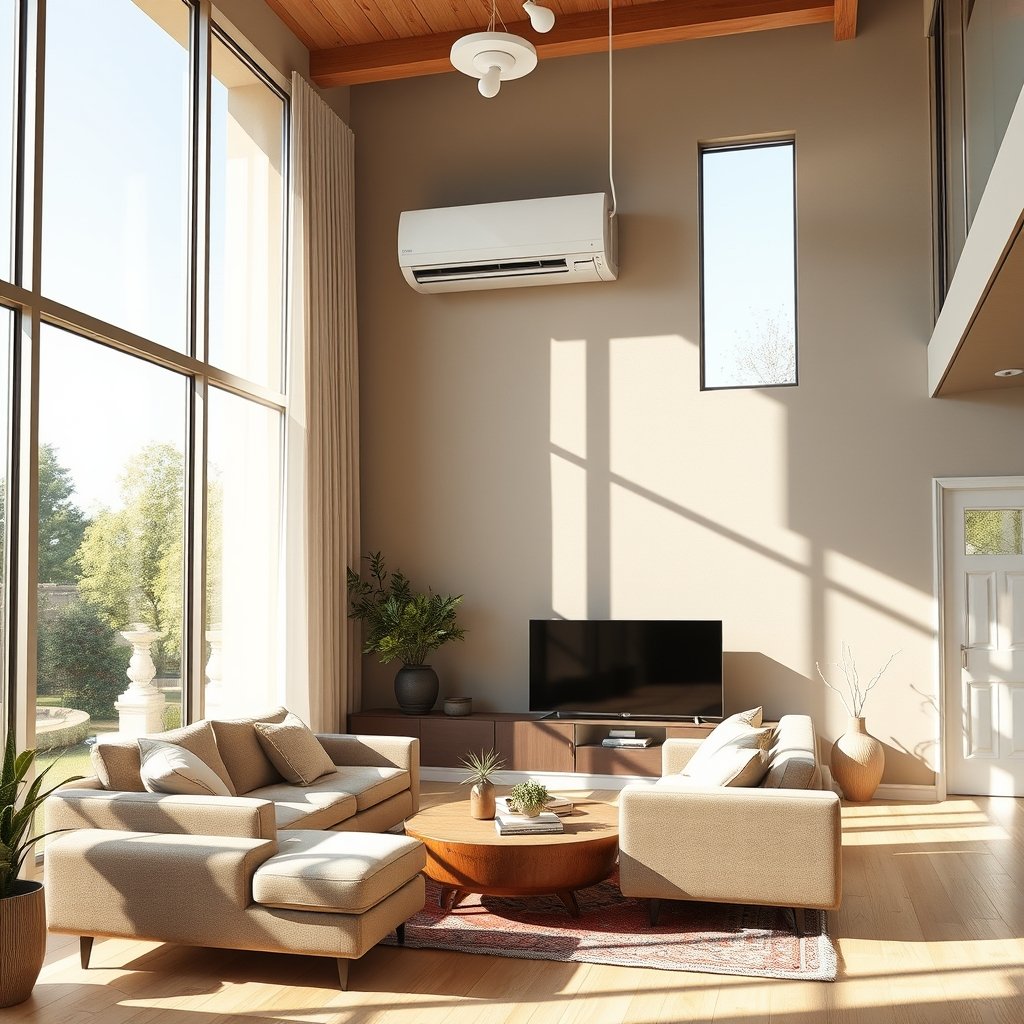
Real Operating-Cost Comparison and Payback Example
Let’s look at a typical scenario for annual energy usage. Consider a high-efficiency 25-SEER2 mini split heat pump used for 2,000 hours per year. According to multiple recent studies, it will use about 1,440 kWh annually (or $187 at an average $0.13/kWh). A comparable 18-SEER2 central air unit uses 2,000 kWh, costing roughly $260.
Over a decade, that means $1,470 saved in electricity alone. Standard mini splits and centrals increase these numbers further—mini splits can cost 30–40% less to operate than a central system at SEER2 16 [source].
In addition, ductless mini split installation typically allows for room-by-room zoning. This means you can selectively cool or heat only the spaces in use, generating even greater savings—especially outside swing seasons.
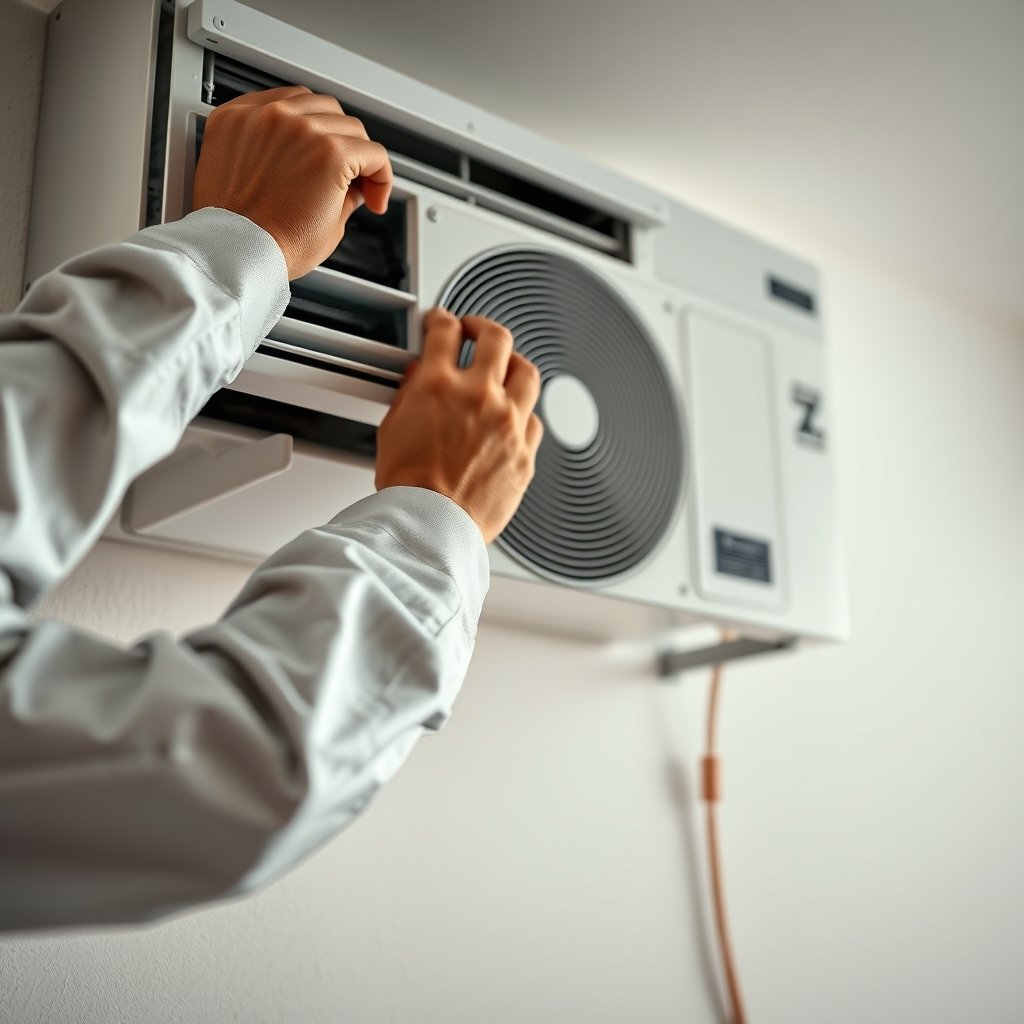
By comparison, standard central air installations are one-size-fits-all. They cool and heat spaces equally, regardless of occupancy, and you can’t easily downsize or turn off “zones.” All of this inflates real-world costs.
Pairing high-efficiency mini splits with programmable or smart thermostats multiplies the operating savings, particularly during unoccupied hours.
If you’re seeking other ways to lower ongoing building expenses, you might also explore modular storage upgrades for building kitchens.
When Mini Splits Make Commercial Sense (Use Cases & Zoning)
Ductless mini split installation is best-suited for specific building types and retrofit scenarios:
- Older properties or additions without existing ductwork
- Spaces needing granular zone control (small offices, conference rooms, server rooms)
- Partial-building conditioning where legacy ducts are inefficient or too costly to renovate
- Environments with high duct losses (above 15%) documented in building diagnostics
For whole-building use, however, you’ll need multiple heads and zones. For example, a 2,000-square-foot office or home may require three to five indoor units, with installed costs in the $15,500–$24,500 range—a substantial investment compared to single-zone setups.
If you’re managing other facilities upgrades, see our breakdown of energy efficient cooking with induction.
Common Installation Constraints and Contractor Pitfalls
Many first-time buyers focus on sticker price, but miss common technical problems:
- Refrigerant line length limits—exceeding max runs cuts efficiency and voids warranties.
- Indoor head placement—finding wall locations free of obstructions, electrical, or plumbing is often challenging.
- Electrical upgrades—mini splits need proper dedicated circuits, and external disconnects for code compliance.
- Improper sizing—if the system is not correctly matched to the conditioned space, short-cycling occurs, lowering efficiency and shortening compressor life.
- Ductless mini split installation frequently requires periodic access for filter cleaning. Many user complaints stem from clogged filters and missed maintenance.
| Mini Split Heat Pump | Central Air Heat Pump |
|---|---|
| SEER2 20–33; COP 3–4.5; HSPF2 10–14 | SEER2 15–22; COP 2–4; HSPF2 8–11 |
| No duct losses | Duct losses up to 30% |
| Multiple indoor heads required for full coverage | Centralized system; no zoning |
| Regular filter maintenance | Annual duct cleaning recommended |
Climate- and Use-case Performance (Cold-Climate & Peak-Load Behavior)
Heating performance for any mini split heat pump depends on ambient temperature. High-end models achieve COPs of 3–4.5 (HSPF2 10–14) at moderate outdoor temperatures but can see reduced performance in sub-freezing conditions. For central air heat pumps, the typical COP is 2–4 [data].
In cold climates, look for models specifically rated for low-ambient operation, or consider hybridizing with backup electric resistance or gas for peak loads. This is crucial for accurate payback modeling in northern zones.
For properties in transition zones or with unpredictable usage patterns, combination setups (mini split for perimeter/offices, central for core) often yield the best lifecycle returns.
Incentives, Rebates, and True Payback
Factoring in federal tax credits, state rebates, and direct utility incentives can reduce your out-of-pocket cost for a mini split heat pump by 10–30%. These incentives meaningfully accelerate ROI.
- Consult the DOE incentives list for current programs.
- Verify eligibility by working with licensed contractors familiar with rebate paperwork.
- For commercial installs, some utility programs offer per-ton payout up to several hundred dollars.
Using our earlier example ($1,470 saved over 10 years), a $2,000 incentive could lower payback to under 7 years—sometimes even less for large, energy inefficient spaces.
Refrigerants, Environmental Impact, and End-of-Life Considerations
Most mini split heat pumps use R410A or the newer R32 refrigerants in 2024. While R32 has a lower global warming potential (GWP) than R410A, both must be handled professionally at end-of-life to avoid emissions penalties and environmental harm.
If a refrigerant leak occurs, prompt repair is critical—not just for system efficiency, but for regulatory compliance. Always confirm contractor EPA certifications and disposal protocols.
Lifecycle emissions also count: production, use, leakage, and recycling/disposal all impact your facility’s carbon profile.
For facility design with low-impact materials, also review our low-maintenance garden ideas to complement net-zero buildings.
Maintenance, Warranties, and Lifecycle Cost Analysis
A mini split heat pump requires more than a filter change twice a year. Contractors should offer minimum 5–10 year limited warranties on compressors; indoor heads may only be covered for one to three years.
- Quarterly filter cleaning is mandatory for warranty and indoor air quality.
- Annual checkups (refrigerant charge, electrical, drain line) are recommended.
- Prompt attention to error codes (communication faults or sensor errors) avoids expensive repairs down the line.
Lifecycle replacement for multi-head systems is a real cost factor. Planned replacement and spare-parts provisioning should be part of your building’s maintenance SOP.
If you’re exploring how other common areas can be upgraded for easier care, our guide to compact dishwashers is a useful next step.
Noise & Acoustic Performance
While generally quiet, mini split heat pump systems still produce measurable indoor and outdoor noise—typically 20–40 dB for indoor heads and 45–55 dB at the compressor outdoors.
Frequent complaints center around placement of outdoor units too close to windows, tenant spaces, or gathering areas. Always request manufacturer acoustic data as part of the procurement process, and avoid mounting units near bedrooms or workspaces.
Comprehensive site surveys and, where feasible, acoustic screening (barriers, landscaping) minimize disturbance.
Explore more building comfort tips in our primer on modern home decor for comfortable living.
Comparisons with Other High-Efficiency Options (VRF, Geothermal, Upgraded Ducted HPs)
It’s critical to benchmark mini split vs central air against other emerging HVAC technologies:
- VRF (Variable Refrigerant Flow): More scalable than standard mini splits for large/multi-story buildings, with advanced control, but higher initial cost and complexity.
- Geothermal Heat Pumps: Offer higher annual efficiency, especially for buildings with large ground area, but installation is capital intensive.
- High-SEER Central Air: Ducts still waste energy, but improved filtration and humidity control may suit certain healthcare or lab spaces.
In most partial or decentralized retrofits, mini split heat pumps win on install speed and zone precision, but are less optimal for large new builds where centralized VRF or geothermal justify their cost.
Smart Controls, Integration, and Remote Monitoring
Modern mini split heat pump systems can be paired with Wi-Fi-connected thermostats, building management systems, and even AI-driven energy scheduling platforms. These controls optimize schedules, sense occupancy, and provide real-time performance data for facilities staff.
- Enable remote system adjustments and fault alerts for maintenance staff
- Track zone-by-zone energy consumption for each mini split head
- Integrate with property-wide BMS for automated setback and comfort tuning
Given that controls can improve efficiency up to 10%, this often-overlooked add-on is a realistic performance multiplier.
Further, for high-tech facility strategies, see our coverage of smart kitchen appliances to push digital integration building-wide.
Procurement & Installation Checklist—What to Ask and Require from Bids
Use this directly in your RFP or procurement documents for any ductless mini split installation or retrofit project:
- Rated SEER2, HSPF2, and COP values per quoted model
- Maximum refrigerant-line length supported
- Number of indoor heads and zones with clear floor plan drawings
- Warranty terms (indoor and outdoor units, labor inclusions)
- Refrigerant type (GWP disclosure and end-of-life disposal plan)
- Measured noise levels (decibel sheets for both indoor and outdoor units)
- Commissioning checklist (pressure testing, thermal imaging for leaks, functional tests with BMS/smart controls)
- Clear language on change orders or upgrades (electrical, controls integrations)
For context, revisit our maintenance and acoustic sections and—before final procurement—benchmark bids against project-specific goals, not just price.

Quick Decision Framework
Here’s a tightly focused path to select the right solution for your building:
- Assess building type & duct condition: High duct losses or no ducts? Favor mini splits.
- Identify climate zone: Cold climates require high-HSPF2, low-ambient models or a hybrid plan.
- Review budget & incentives: Stack all utility and federal incentives to get net install cost.
- Estimate zones/heads: 3–5 heads for 2,000 sq ft is typical; cost rises fast as zones increase.
- Select system type: Single/multi-zone mini split, VRF for large scale, or upgraded central if ducts are new/good.
- Anchor expectations: SEER2 20–33 vs 15–22; 15–30% duct loss; $73/yr or $1,470/10 years saved.
Don’t overlook lifecycle costs, refrigerant impacts, or how controls add to ROI.
FAQ
How much can I really save on operating costs with a mini split heat pump?
Typically, mini split heat pumps deliver 30–40% lower operating costs than central air, especially in buildings with old or leaky ducts. Expect to save about $73/year (or $1,470 over 10 years) compared to an 18-SEER central, assuming 2,000 annual hours and average US electricity costs.
Can a mini split heat pump cover an entire office or commercial property?
Yes, but you’ll need several indoor heads—usually 3–5 for a 2,000 sq ft footprint. Whole-building applications increase installed cost to $15,500–$24,500. Consider if partial or zone-based retrofits make better sense for your use case.
Are there significant downsides or headaches to ductless mini split installation?
Improper sizing, difficult head placement, electrical upgrades, and regular filter cleaning are the top complaints. Also, noise from outdoor compressors can be an issue if not placed carefully. Always specify these items in your RFP and verify contractor experience with large projects.
How do rebates or tax credits change the ROI for this investment?
Federal and utility incentives can reduce your net install cost by 10–30%. This shortens payback by 1–2 years, making a mini split heat pump more competitive than most central options. Always confirm eligibility before purchase.
What’s the typical maintenance routine for a mini split heat pump?
Quarterly cleaning of filters, annual system checkups, and prompt service for error codes. Neglecting filter maintenance reduces efficiency and risks voiding your warranty. Review warranty coverage for both indoor and outdoor units before signing.