

### Blog Post:
Induction cooktop technology is one of the fastest, most energy-efficient advances in home cooking—but most guides miss real-life downsides like lifecycle emissions, true total cost, and the everyday quirks of using a portable induction cooktop. If you’re eco-conscious and researching whether induction is a smart upgrade for your kitchen or apartment, here’s what you need to know before making the switch.
Key Takeaways
- Induction cooktops bring 85–90% efficiency and cook up to 40% faster than gas, slashing energy bills and indoor air pollution.
- True climate benefits depend on your local electricity source—induction’s full lifecycle emissions vary with grid mix.
- Portable induction units have real-world quirks: cookware compatibility, noise, and power limits you should know before buying.
- What is an induction cooktop and how does it work?
- Efficiency and speed — the 2024 numbers you should know
- Lifecycle carbon-footprint: why grid mix matters
- Total cost of ownership — purchase, rebates, operating and repair costs
- Indoor air quality and health impacts — what induction eliminates
- Real user pain points with portable induction cooktops
- Buying guide for a portable induction cooktop
- How to minimize the common downsides
- Quick payback example
- Short FAQ
- Final recommendation and next steps
What is an induction cooktop and how does it work?
An induction cooktop uses electromagnetic energy to directly heat compatible pots and pans—not the surface itself. Inside the cooktop, coils generate a magnetic field that excites iron molecules in your cookware. The result: your pan gets hot very quickly, but the cooktop glass stays relatively cool except where heat reflects up from the pot. This means faster boil times and much finer control over cooking temperatures compared to gas or standard electric stoves.
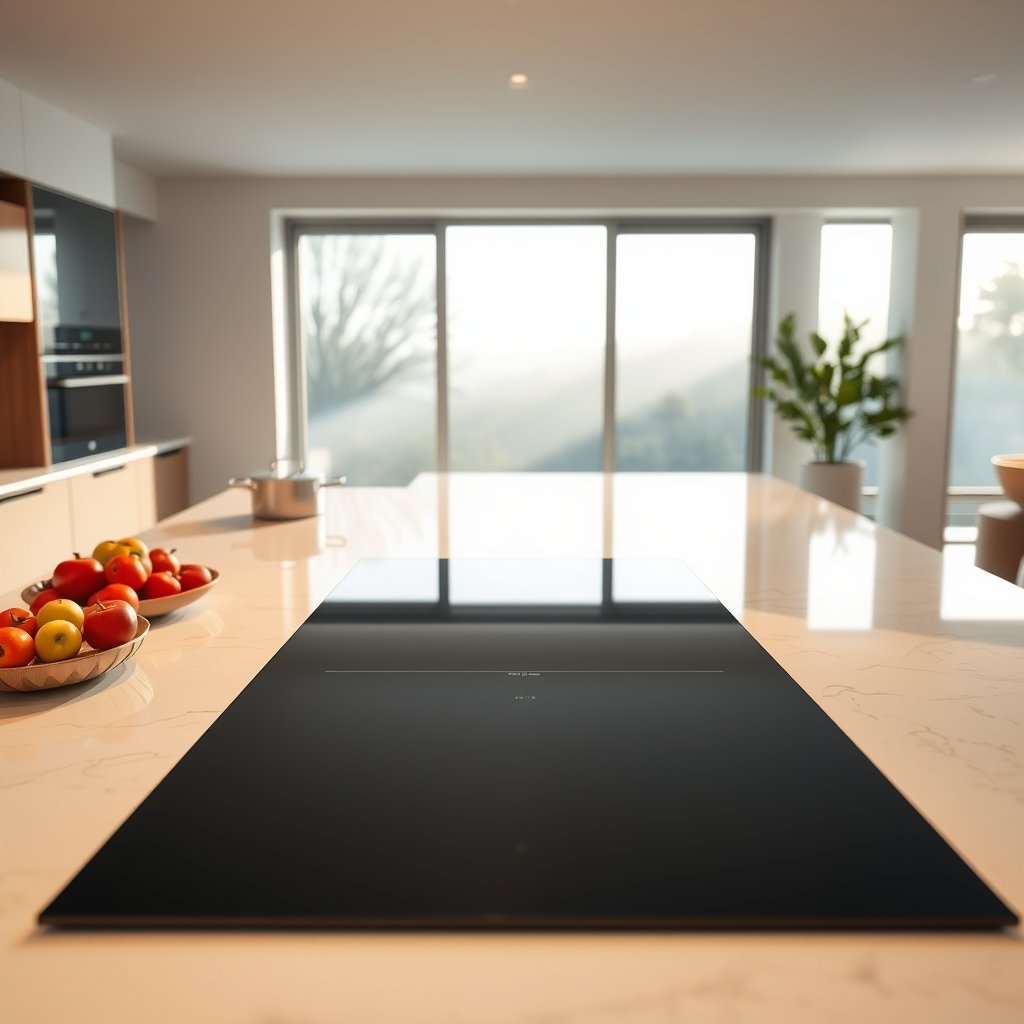
Because only ferromagnetic cookware (like cast iron or most stainless steel) will work, it’s easy to check: if a magnet sticks solidly to your pot, induction will heat it. The smooth glass surface is easier to clean than old coil or gas tops, and there’s less residual heat, lowering accidental burns. For more about organizing a small or modern kitchen for fast cleanup, see our kitchen ideas guide.
Learn more about how induction works.
Efficiency and speed — the 2024 numbers you should know
In real kitchens, induction cooktops convert about 85–90% of the electricity they pull into heat used for cooking. Compare that to gas stoves at just 30–40% efficiency, and smooth-top electric at around 70–75%. The takeaway: less wasted energy, less ambient heat in your kitchen, and much faster cooking[1].
Recent tests show that induction can boil water up to 40% faster than gas and 20–30% faster than a typical electric cooktop[2]. For everyday use, this adds up to household energy savings of about 30–50% vs gas and at least 10–15% vs electric. If you’re in a small apartment, this can also cut down on unwanted heat and help you keep your space cool.
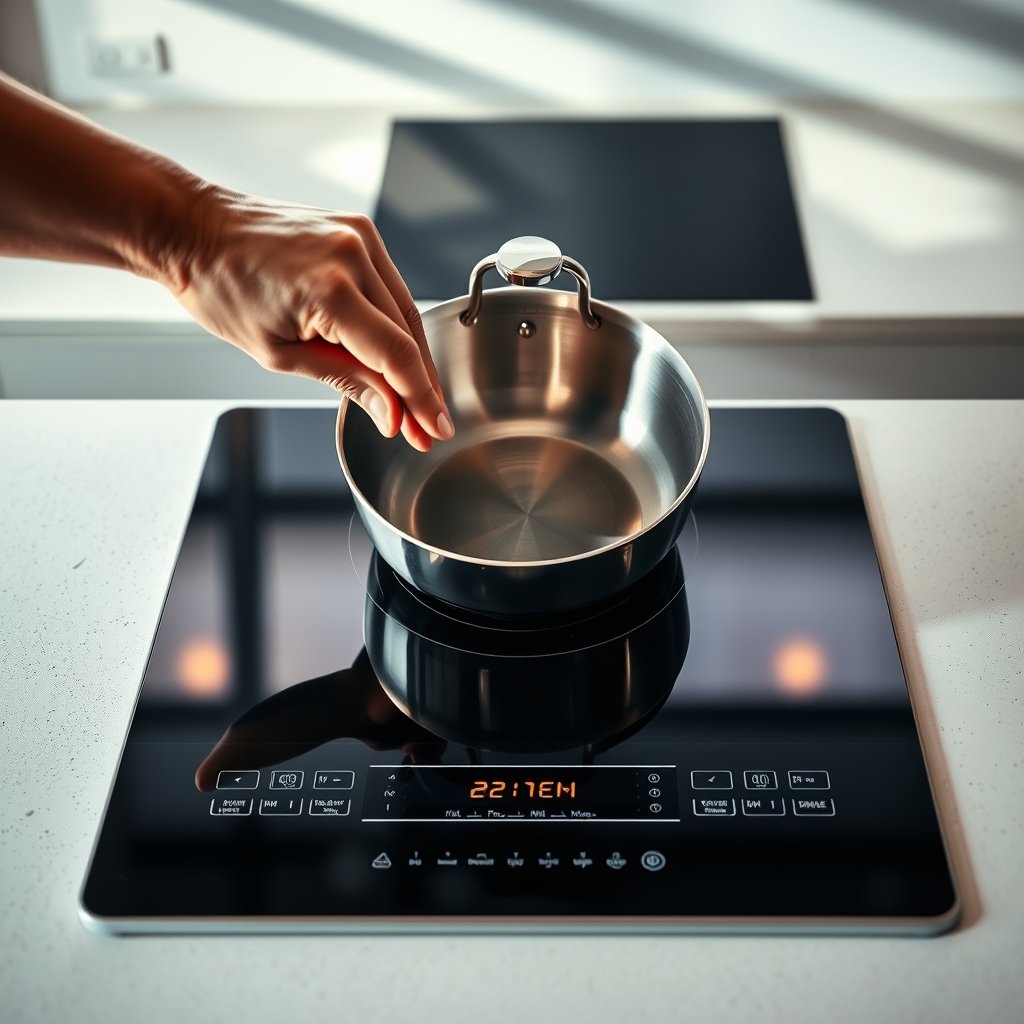
This efficiency isn’t just good for your bills—it also means your air stays cleaner, and your kitchen can be more comfortable, especially when cooking for guests or in a small space.
Lifecycle carbon-footprint: why grid mix matters
Most induction cooktop guides stop at appliance efficiency. But real climate impact depends on how your local electricity gets made. If your power mostly comes from renewable sources or nuclear, induction’s low emissions are hard to beat. But if you’re on a fossil-fuel-heavy grid, things get complicated.
Here’s why: burning coal or gas to make electricity wastes energy at the power plant, before it even gets to your home. While your induction cooktop might use energy efficiently at home, the overall “end-to-end” efficiency can be as low as 25–40% when factoring in generation and transmission losses if your grid relies on fossil fuels[3].
| Cooking Method | Appliance Efficiency | End-to-End Efficiency (Renewable Grid) | End-to-End Efficiency (US Grid Average) | End-to-End Efficiency (Fossil-Heavy Grid) |
|---|---|---|---|---|
| Induction cooktop | 85–90% | ~80–90% | ~35–50% | ~25–40% |
| Electric cooktop | 70–75% | ~65–75% | ~30–40% | ~20–33% |
| Gas cooktop | 30–40% | 30–40% | 30–40% | 30–40% |
This is why pairing an induction cooktop with a green power plan or rooftop solar maximizes climate benefits. If you’re looking for more ways to bring sustainability home, see our garden ideas for low-impact living.
Total cost of ownership — purchase, rebates, operating and repair costs
Induction cooktops (and full induction ranges) usually have the highest purchase price among all stove types. For example, in 2024, a name-brand induction range averages $1,200–$1,600, while a similar electric range is $650–$800 and gas around $700–$900[4].
What many overlook is payback from lower energy bills and possible rebates for switching to induction, as well as necessary upfront spend on compatible cookware. Most users see 30–50% energy savings per year vs gas and 10–15% vs electric. Maintenance and repair costs are comparable to modern electric cooktops, but resale value trends higher for newer apartments that advertise induction or all-electric kitchens.
If you’re optimizing for a small kitchen or need to maximize every dollar, check our kitchen organization ideas for strategies that pair well with compact induction units.
Indoor air quality and health impacts — what induction eliminates
Gas stoves release nitrogen dioxide (NO2), carbon monoxide (CO), benzene, and fine particulates (PM2.5), all of which harm indoor air and health. In some studies, gas-cooking homes exceeded the World Health Organization’s 24-hour NO2 guideline on 55–75% of winter days just from typical everyday use[5]. Induction cooktop cooking emits zero combustion pollutants, meaning no CO, no benzene (a known carcinogen), and virtually no asthma triggers for children.
This health win is especially important for renters or families in buildings where ventilation is poor. If keeping your space livable and comfortable is a priority, see our pet-friendly home hacks for air quality and wellbeing.
Real user pain points with portable induction cooktops
Portable induction cooktop units are a great fit for renters, travelers, and those with small kitchens, but users report several common problems:
- Only magnetic cookware works—aluminum, glass, and some stainless won’t heat up at all.
- Higher upfront price for the unit and (often) for compatible pots or pans.
- Learning curve: power settings are different from traditional cooking, requiring adjustments and sometimes under- or overcooking at first.
- Audible humming or buzzing, especially at high power and with heavier, flat-bottomed pans.
- Portable induction units have less total power, so achieving steakhouse-level sears or wok cooking is usually out of reach.
- Occasional sensor misfires or automatic shutoffs (for safety if the pan is off-center or too small).
- Fragile glass-ceramic tops can scratch or crack if dropped or if heavy pots are slid, though protective mats can help.
User reviews echo these points across brands, especially for compact models bought as an affordable way to try induction. For more tips on maximizing small spaces and appliances, check out our home decor ideas that marry style and function.
Buying guide for a portable induction cooktop
Here’s what you should look for before buying any portable induction cooktop:
- Wattage output: Higher wattage (1,800W+) means faster heating, but many portables max out below this.
- Number of burners: Single burners are compact; double burners add flexibility for meal prep.
- Pan size compatibility: Check the minimum and maximum supported base diameters—pans too small won’t trigger the sensors.
- Precision of controls: More precise wattage or temperature steps help with delicate foods.
- Surface and build: Look for durable glass-ceramic surfaces—cheaper ones scratch more easily.
- Noise level: Some models list decibel ratings or user reviews mention hums and clicks.
- Safety features: Auto shutoff, overheat protection, and child lock are essential.
- Warranty and repair: Major brands generally offer better support networks.
Remember, portable induction cooktops generally can’t deliver true high-heat searing or wok hei found on full-size induction ranges. Plan your cookware accordingly, and know these are best for everyday, not gourmet, use.
How to minimize the common downsides
Most portable induction cooktop headaches can be reduced with a few practical tips:
- Check your pots with a magnet—if it sticks, you’re good. Cast iron, enameled steel, and many (but not all) stainless brands work well.
- To avoid humming and buzzing, use heavier, flat-bottomed pans. Thin, lightweight or warped pans vibrate and cause more noise.
- Don’t use pans with a base much smaller than the burner ring—sensors might not detect them, leading to frustrating auto-shutoffs.
- Keep a silicone or fabric mat between your pan and glass to protect the surface; never drag heavy cookware across it.
- Clean only after the glass cools, using non-abrasive cloths and no harsh scrubbers or chemicals.
- If you need more heat or faster meal prep, consider a two-burner model or a built-in full-range cooktop instead of just a portable.
Upgrading your cookware set may seem like a pain, but it’s a one-time fix that also helps prevent noise and power-loss issues down the line.
Quick payback example (short case study)
Let’s say you’re replacing an aging gas stove in an apartment with a new induction range that costs $1,400 upfront (vs. $800 for gas). Your household uses about $65/year in gas for cooking, and switching to induction at your local electric rate drops that to $40/year—plus, you’re using 40% less total energy. Factoring in estimated $150/year climate/health benefit (per EPA), you recoup the extra purchase cost in less than 5 years.
In regions with cheaper, cleaner electricity, payback is even faster—and the improved indoor air is immediate.
If you want to dig into your specific numbers and compare small kitchen upgrades, grab our free payback and cookware checklist and see our smart kitchen appliances breakdown.

Final recommendation and next steps
Induction cooktops and portable induction cooktop units are the go-to for eco-conscious cooks and apartment dwellers who want faster, cleaner, more energy-efficient cooking with indoor air-quality benefits. A portable induction cooktop is perfect if you rent, relocate often, or need supplemental burners. Choose a full induction range for the highest performance and if you’re renovating or moving into a forever home. If ultra-high-heat cooking is a must, traditional gas may still suit you—but consider the health and climate tradeoffs. In any scenario, knowing the facts lets you make the best decision for your kitchen and budget. Download our payback and cookware checklist for a personalized savings plan, and reference our induction vs. gas boil-time table for fast comparisons. For more, explore our latest garden ideas or dig deep into other energy-efficient kitchen upgrades.
Short FAQ
Are induction cooktops safe for people with pacemakers?
Yes. Modern pacemakers are robust and not affected by the electromagnetic field of an induction cooktop. If your device was implanted decades ago, check with your doctor first, but risk for current models is virtually zero.
Do I need new cookware for an induction cooktop?
Only magnetic cookware works, such as cast iron or many stainless pans. If a magnet sticks firmly to the base, it’ll work. Aluminum, copper, or glass pots will not heat up.
Is an induction cooktop really more efficient than gas or electric?
Yes. Appliance-level efficiency is about 85–90%, compared to 30–40% for gas and about 75% for electric. Actual savings depend on your grid.
Can I get good searing or high-heat cooking on a portable induction cooktop?
Portable induction units are often limited by lower wattage, so very high-heat searing is tricky. Full induction ranges deliver better performance for steakhouse results.
Will the glass top of my induction cooktop crack?
The glass-ceramic is strong but can crack if you drop a heavy pot or hit it hard. Using protective mats and being careful handling cookware greatly reduces risk.
—