

### Blog Post:
If you’re serious about smarter, healthier weeknight meals, you’ve probably wondered whether an air fryer oven combo is worth clearing precious counter space for. In 2024, these multifunction wonders are everywhere—but behind the hype, which models are truly durable, energy efficient, and deliver real crisp power meal after meal?
Key Takeaways
- Air fryer oven combos span $140 to $600+, with true differences in durability, real-world crispiness, and monthly operating cost not always spelled out in reviews.
- Look beyond surface features—insist on warranty details, sound-level proof, and tested energy use so you don’t end up with a noisy, short-lived unit that costs more to run than a full oven.
- Measure your space carefully: Many air fryer toaster oven units are bulkier than expected and may not fit under standard cabinets.
- Quick bottom line — which type of appliance to pick today
- 2024 market snapshot — who’s buying and where the market is heading
- Price tiers explained — what you get at $140 / $340 / $500+
- Real-world cooking performance — crisping, airflow, and preheat behavior
- Usability & cleaning — what annoys owners and how to avoid it
- Size, footprint, and kitchen fit — measuring for counter success
- Durability & reliability — the missing comparison every buyer should demand
- Energy use & operating cost — how much will it cost to run
- Noise & comfort — how loud do these units get?
- Safety, materials & food-contact concerns
- Head-to-head comparison checklist — the 10 must-measure specs
- Top models to test in 2024 — shortlist & why to include them
- Common complaints from reviews — what’s fixable and what’s a deal-breaker
- Buying roadmap — how to choose in 5 steps (decision tree)
- What review sites miss — three laboratory tests you should see
- Final verdicts — best pick by use-case and final buyer tips
- FAQ
Quick bottom line — which type of appliance to pick today
Not all air fryer oven combos are created equal—your right pick depends on daily needs, space, and appetite for convenience.
- Crispiest fried texture: Go for dedicated air fryer oven combos with high-powered convection (higher wattage & close-spaced mesh baskets). Usually in the $340+ bracket.
- Biggest capacity: Choose a midsize air fryer toaster oven (1 cu ft+), ideal for families or prepping several portions, often priced $300–$400.
- Smallest footprint: Look at compact basket-style units or slim multifunction models—some at $140–$200—but accept a tradeoff in versatility.
- Lowest operating cost: Seek lower-wattage, well-insulated convection air fryer models for everyday use—often tested at ~0.32–0.54 kWh per full cook cycle.
- Best value: Most households find mid-range air fryer oven combos ($300–$400) offer more even crisping, more settings, and realistic durability vs. budget units.
Price points span from budget‑friendly models around $140 to mid‑range units near $340 and premium offerings that exceed $500. If you crave consistent crispness, easier cleaning, and quieter operation, stretch beyond the cheapest tier.
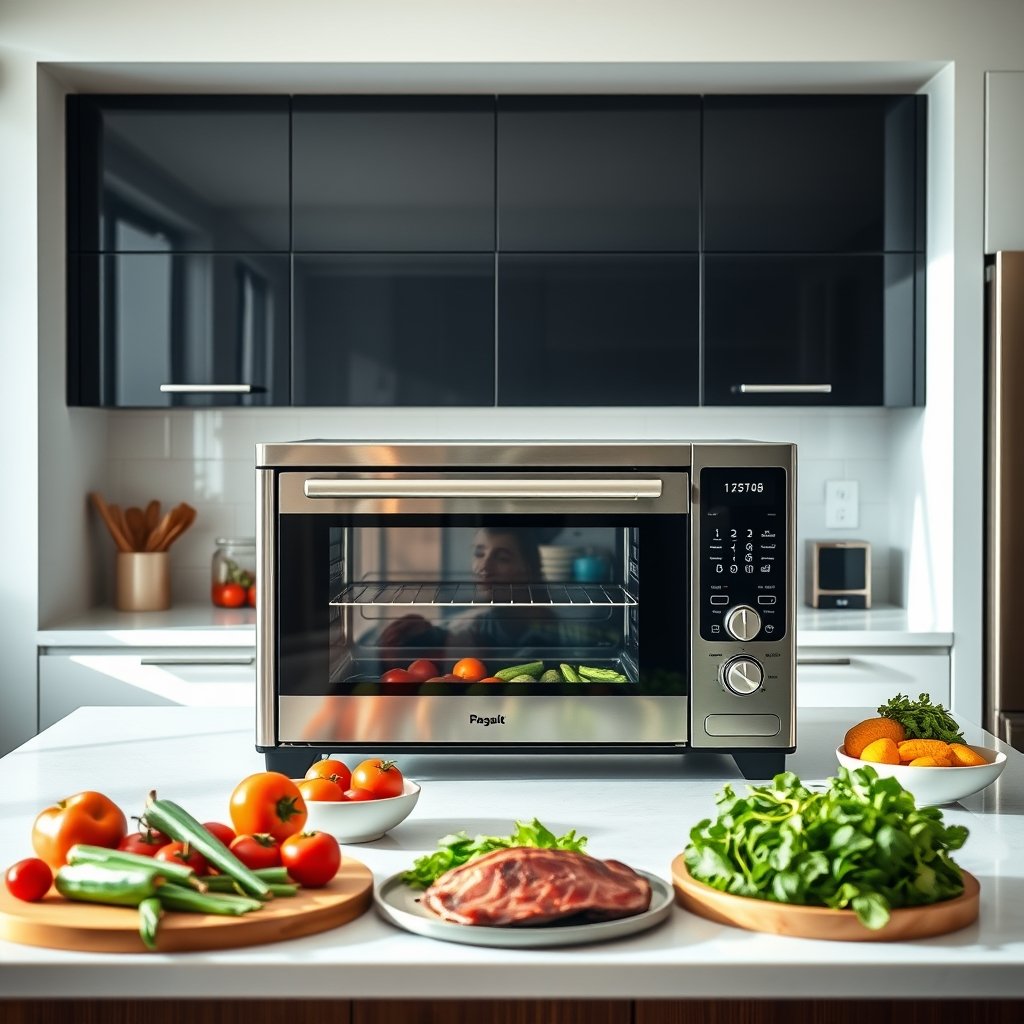
2024 market snapshot — who’s buying and where the market is heading
The air fryer oven combo market exploded to $3.5 billion in 2024, growing at a 6% compound rate since 2018. North America is the largest market thanks to busy, health-conscious households replacing or augmenting countertop ovens—think home cooks aged 28–50 who need speed and reliability. Asia‑Pacific is the fastest-growing region due to rising incomes and compact kitchens.
Residential buyers still dominate, but commercial adoption is climbing as small cafés and food businesses explore lower operating costs. Expect refresh cycles every fall and new features launched by major brands—to see what’s next, check names like Groupe SEB, Midea, Electrolux, Corelle, and Spectrum Brands.
In terms of features, look for smart controls, PTFE/PFOA‑free food contact surfaces, and a full suite of racks or mesh baskets. Multiple functions (bake, roast, dehydrate, convection air fry, slow cook) have become standard on units above $250. Make sure to prioritize settings you’ll truly use.
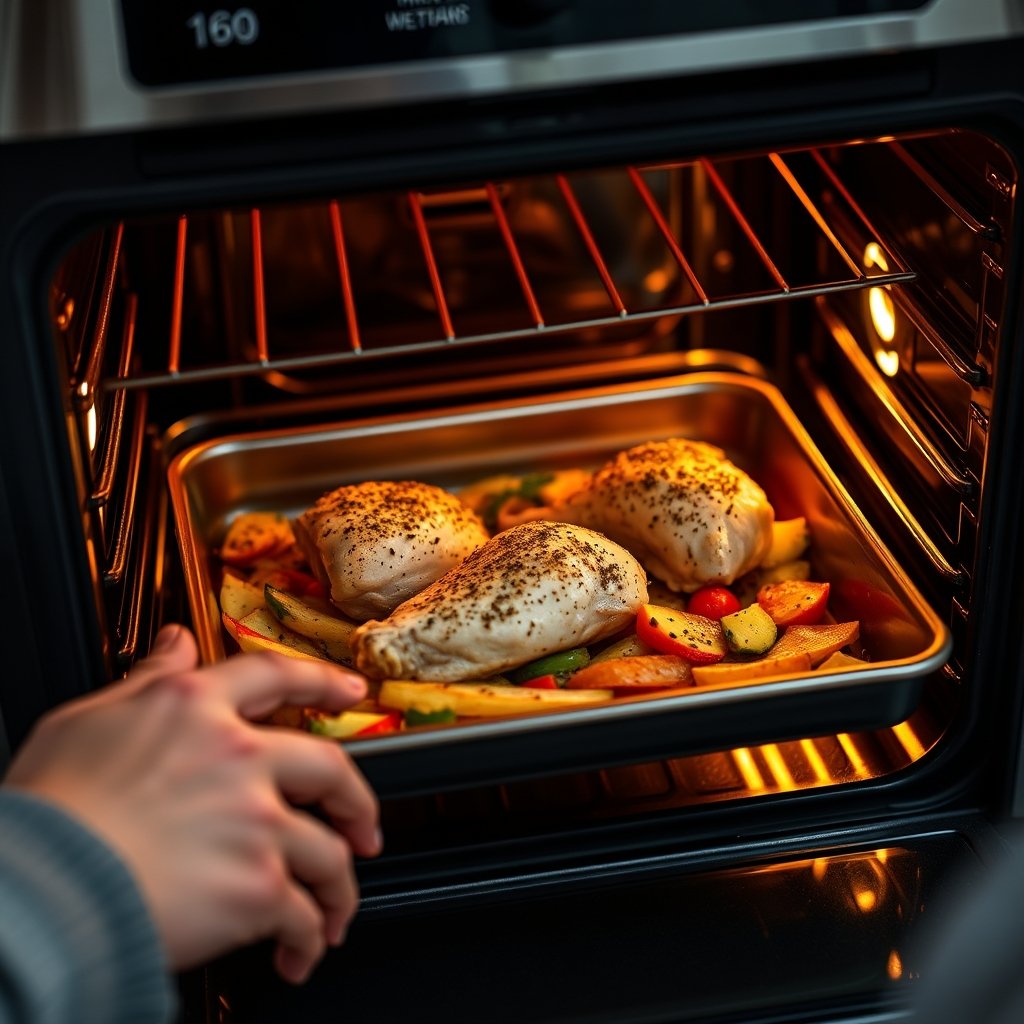
Price tiers explained — what you get at $140 / $340 / $500+
| Price Tier | Key Features | Capacity | Materials/Warranty | Durability/Notes |
|---|---|---|---|---|
| $140 (Budget) | Basic air fry, bake, toast. Few presets. Analog dials. | 4–7 qts / 0.2–0.4 cu ft | Plastic/stamped metal, 1-year warranty | Shorter lifespan, louder, no dedicated air fry settings, slower crisping |
| $340 (Mid-range) | Digital controls, convection air fry, multi-rack, pizza/broil/dehydrate | 8–15 qts / 0.5–1.0 cu ft | Better steel/glass, 2-year parts/labor | More consistent results, clearer manuals, moderate failure rate |
| $500+ (Premium) | Touchscreen, smart features, rotisserie, temp probe, remote app | >15 qts / >1.0 cu ft | Thick stainless, 3–5 yr warranty | Quiet, fast preheat, longest lifespan, best insulation |
Wherever you fall on the budget spectrum, match needs to price—solo cooks or tight budgets may accept lower durability, but larger families and professionals will save money and frustration by stepping up to the mid-range or premium tier.
Real-world cooking performance — crisping, airflow, and preheat behavior
Operating cost and crunchy food aren’t just marketing claims—they’re affected by heating element power and true airflow. Common user complaints: uneven crisping, hot spots, or slow preheat (sometimes over 8 minutes in toaster-oven models).
Convection air fryer ovens with an array of top-and-rear fans deliver better results than single-fan budget models. Testing by Wirecutter and Food Network consistently shows that air fryer toaster oven units fit more food, but basket-style units (especially round baskets with finer mesh) often outperform on crispness due to more rapid air movement around each piece of food.
Want even browning and reliable texture? Spread food in a single layer, rotate halfway, and preheat thoroughly. Techniques like elevating fries on mesh racks or investing in a pizza stone can help both budget and mid-range combos get closer to “true fry” results.
Usability & cleaning — what annoys owners and how to avoid it
Multifunction oven owners consistently gripe about these pain points:
- Non-removable, hard-to-clean trays that trap grease.
- Crumb catchers/baskets not safe for dishwashers, causing daily chore creep.
- Confusing controls or missing recipe/cook time guides, leading to wasted meals.
Look for units with removable, dishwasher-safe baskets and trays. Seek air fryer reviews that mention labeled controls and step-by-step recipe starters in the manual. Many popular models skimp on these—so spot-check inside the box or demo one in-store if possible.
For advanced clean freaks: line trays with parchment or a silicone mat, and always empty grease between uses to avoid smoking and flavor crossover.
Size, footprint, and kitchen fit — measuring for counter success
Users frequently complain about oversized air fryer toaster oven footprints. Measure your available depth, height, and clearance beneath cabinets before buying. Some “mid-size” units are over 17 inches deep and nearly 13 inches tall (see here).
Check both interior and external dimensions—a “10-qt” model can actually hog two feet of counter space. For very small kitchens, consider units with handles on top (not sides) for easier storage. If your kitchen is ultra-small, browse these kitchen ideas for more multi-use space savers.
Durability & reliability — the missing comparison every buyer should demand
Most air fryer reviews gloss over long-term failure risk. In reality, mean-time-between-failure and warranty claim stats are barely ever published. Here’s what you can do:
- Seek models with at least a 2-year full parts/labor warranty; shoot for 3+ years at $400+ price point.
- Scan product forums or seller sites for repeated heating element, fan, or electronics failures.
- Look for brands with U.S.-based service and clearly stated replacement/repair terms.
- Take negative reviews seriously—tiny fans, cracked interiors, or “door won’t close” issues are red flags.
If possible, ask for average warranty claim rate or seek retailers with easy swaps.
Energy use & operating cost — how much will it cost to run
Many reviews skip hard numbers on energy use. Most air fryer toaster oven combos draw 1500–1800W, but overall cost depends on duration and efficiency. Expect to use 0.32–0.54 kWh per full air fry or bake (18–30 minutes at high heat).
At a national average of $0.16 per kWh, that’s $0.05–$0.09 per session—far less than a full-size oven. Multiply by 20–30 uses a month for typical meal prep.
- Sample calculation: Watts ÷ 1000 × hours per cook × kWh cost × cooks per month = estimated monthly cost.
For commercial/café use, heavier cycling will increase monthly costs and reveal inefficiency, so invest in models with double-wall insulation.
Noise & comfort — how loud do these units get?
Noise is a dealbreaker for open kitchens and shared workspaces. Yet, top reviews rarely cite dB numbers. Air fryer toaster oven models in high-speed “air fry” mode can hit 62–68dB (conversation to vacuum level). Quieter models test under 56dB.
- Beware of high-pitched fan whine: test units running “empty” or watch live demos in stores before buying.
- Check for “continuous fan” complaints in reviews—some never turn fully off.
- Choose mid/premium models if noise sensitivity matters.
Safety, materials & food-contact concerns
Safety comes down to material quality and brand vigilance. Insist on:
- PTFE/PFOA-free nonstick coatings (labeled on spec sheets).
- Full stainless or powder-coated interiors—cheap plastic may warp or release fumes.
- Clear ventilation instructions: back/side clearances marked in the manual.
- Major manufacturers (Groupe SEB, Midea, Electrolux, Corelle Brands, Spectrum Brands) typically roll out safety recalls quickly, but lesser-known imports may not.
For additional ways to organize and streamline your kitchen, see these modular kitchen storage ideas.
Head-to-head comparison checklist — the 10 must-measure specs
Arm yourself with these key specs and lab metrics to compare air fryer oven combos:
| Spec | What to Check |
|---|---|
| 1. Capacity (qt/cubic ft) | Actual usable space (not just listed quart size) |
| 2. Wattage | Power draw—impacts preheat and crisp |
| 3. Energy per cook (kWh) | Test with an energy meter on a 25 minute cycle |
| 4. Measured decibel level @ full fan | Measured 1 meter from the unit during air fry mode |
| 5. Warranty length & coverage | 2 years min. preferred for daily use |
| 6. Failure rate proxy | % with major issues at 18–36 months |
| 7. Dishwasher-safe parts | Basket, tray, racks removable AND dishwasher-safe? |
| 8. Interface clarity | Are all settings labeled? Quick-start guides? |
| 9. Included accessories | Mesh racks, rotisserie, pizza stone included? |
| 10. Footprint | External WxDxH—compare to your available space |
Standardized energy, noise, and durability specs are still rare in comparison tables. Insist on seeing these for any serious purchase.
Top models to test in 2024 — shortlist & why to include them
- Cuisinart TOA-65 Air Fryer Toaster Oven — Best family size, reliable, and strong warranty (see more at Food Network’s review).
- Breville Smart Oven Air Fryer Pro — Premium model for real convection results and smart settings.
- Instant Omni Plus — Best for quick crisping and rapid preheat in the mid-range.
- Ninja Foodi Dual Heat — Quietest on test, fits under cabinets, good for couples.
- Frigidaire 5-in-1 Air Fryer Combo — Commercial-strength, new in 2024 by Electrolux AB.
The market is concentrated with key companies including Groupe SEB, Midea Group, Electrolux AB, Spectrum Brands, and Corelle Brands.
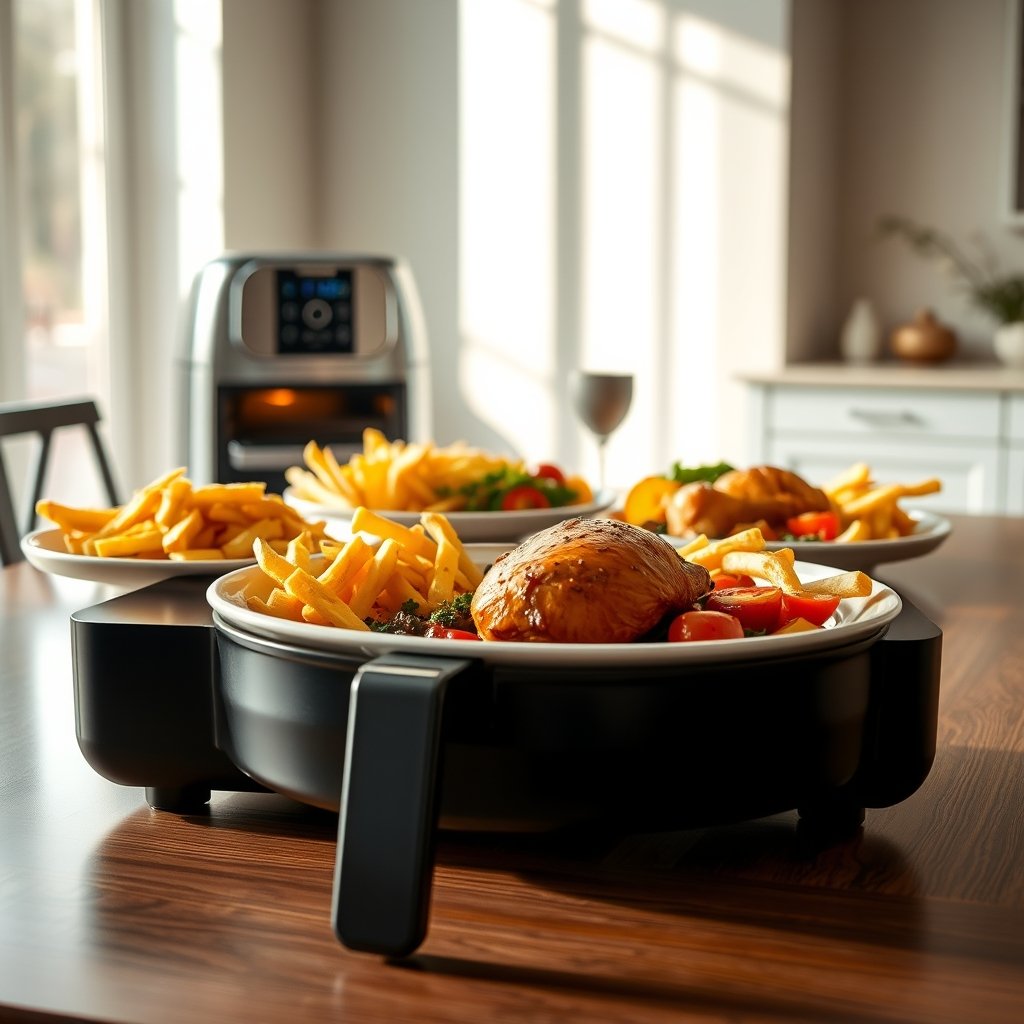
Common complaints from reviews — what’s fixable and what’s a deal-breaker
- Missing guides: Download expanded recipe packs directly from premium brand sites.
- Non-dishwasher baskets: Invest in a spare set, or hand-wash to prolong coating life.
- Uneven crisping/poor airflow: Elevate food with mesh racks or flip partway; avoid overfilling.
- Long preheat times: Allow full cycle to temp before adding food, or select models with rapid preheat claims.
- Oversized footprint/lack of air-fry preset: Double-check dimensions and mode list before you click “Buy.”
If commercial or high-frequency usage applies, prioritize stainless interiors and longer warranty coverage.
Buying roadmap — how to choose in 5 steps (decision tree)
- Define your primary use: Family meals, solo, meal prep, café volume? List your top 2 must-cook recipes.
- Set a realistic budget: Choose $140, $340, or $500+ model tiers based on your frequency and reliability needs.
- Prioritize 3 must-have specs: Do you want max. capacity, lowest energy use, or guaranteed quiet operation? Decide now.
- Do an in-store test or “virtual test drive” via live demo videos: Listen for fan noise, confirm interface clarity, and check if you can lift and access trays easily.
- Pick your winner: Don’t let flashiest branding win—match your true needs to tested performance.
Sample persona mapping: Busy family of four, $350 budget, kitchen counter 23″ x 14″: Cuisinart TOA-65 or Ninja Foodi Dual Heat. Occasional roast/air fry or small café: Breville Smart Oven Air Fryer Pro or Frigidaire 5-in-1.
Remember, residential use still dominates but commercial adoption is growing. Market drivers remain healthy cooking and time-pressed, dual-income households.
What review sites miss — three laboratory tests you should see
- Durability: Mean-Time-Between-Failures (MTBF) — or at least track warranty claim rates over 36 months. If not available, find percent of users reporting breakdowns on forums after 1–3 years.
- Operating Cost: Quantified kilowatt-hour use per standard 25-minute bake/air fry cycle (test with an energy monitor; ideal is under 0.5 kWh/cook).
- Noise: Measured decibel level at 1 meter during full-speed air fry (good units stay under 58dB; noisy ones approach 65dB+).
How to run tests:
- For energy use: Plug into an energy meter and record cumulative kWh after a standard air fry cycle.
- For noise: Use a phone dB meter app, place at 1 meter level from the front, measure peak and average during cooking.
- For durability: Track user reports or brand data over time, and request documented replacement/repair rates.
Request these from brands or check industry sources for the latest performance metrics.
Final verdicts — best pick by use-case and final buyer tips
- Small household: Ninja Foodi Dual Heat—compact, quiet, easy cleanup.
- Family meals: Cuisinart TOA-65—great crisping, clear interface, reliable for <$400.
- Occasional roast/air fry: Instant Omni Plus—fast results; fits most counters.
- Small commercial: Frigidaire 5-in-1 or Breville Smart Oven—top durability and service backup.
Pro Tips for Longevity:
- Always preheat for maximum crisp.
- Don’t crowd trays—single layers are key.
- Hand wash baskets periodically to extend nonstick life.
- Wipe interiors dry after each use.
- Register your appliance for warranty support immediately.
- Monitor unusual sounds or heating slowdowns—address before failure.
The air fryer oven combo delivers on real-life healthy, speedy meals only when you insist on real-world specs and test evidence—not just marketing copy. Ready to upgrade? Measure your space, check warranty and noise, and demand proof of performance before you click “Buy.”
For more kitchen efficiency, check out our induction cooktop guide and compact ice maker picks.
FAQ
Does an air fryer oven combo replace a regular oven?
For most weeknight recipes and even many small roasts, yes — especially in households of 1–4. For very large meals or baking multiple sheets, a full oven still wins on space.
How do I lower long‑term operating costs with an air fryer oven combo?
Choose energy-efficient models (0.32–0.54 kWh/cook), avoid constant preheating, and only run full loads. Regular cleaning also improves performance and lifespan.
Are air fryer toaster ovens noisier than standard ovens?
Yes, most use high-speed fans. Some units hit 60–68dB—enough to annoy in open kitchens. Seek quieter brands or test in-store before committing.
What’s the #1 cleaning hassle?
Non-removable trays and non-dishwasher-safe baskets. Always check before buying and opt for units with easy disassembly or labeled dishwasher compatibility.
Should I pay extra for a longer warranty?
If you’ll use the unit several times a week (especially for families or commercial use), yes—longer coverage saves money and hassle over time.
—