

If your under sink organizer is just a precarious stack of bottles and loose bins, you’re not alone. Most homeowners lose a huge chunk of storage there—thanks to awkward pipes, disposals, poor-quality organizers, and no concrete plan for what actually goes where. If you’re tired of wasting time rummaging for cleaning spray (or finding yet another mildew patch), this practical, numbers-first guide will show you exactly how to reclaim real, usable space under the sink—fast.
Key Takeaways
- 30–35% of a typical kitchen under-sink cabinet’s volume—about 12–15 liters—is usually wasted due to plumbing and poor organization. Measuring your space is the first step to fixing it.
- Sorting items by frequency (daily, weekly, seasonal) dramatically improves access, while moisture-resistant materials prevent long-term mold and damage.
- Organizers that aren’t adjustable, hit pipes, or use flimsy materials are top causes of wasted money and space. Always map, measure, and select modular solutions for best ROI.
- Why under-sink space gets wasted (and how much)
- Quick, repeatable method to measure usable vs wasted volume
- Prioritize: frequency-based categorization to keep daily items accessible
- Designing around pipes, disposals and irregular interiors
- Choosing adaptable pull-outs and modular systems (buying guide)
- Materials & moisture-resistance — what pros don’t tell you
- DIY quick installs: convert existing shelves into effective pull-outs
- Maintenance routine to maximize usable life and prevent mold
- Step-by-step layout planner and purchasing checklist
- Common mistakes to avoid (short dos & don’ts)
- Quick product recommendations & where to buy (segmented by cabinet type)
- Expected gains and simple ROI (what you should achieve)
- FAQ
Why under-sink space gets wasted (and how much)
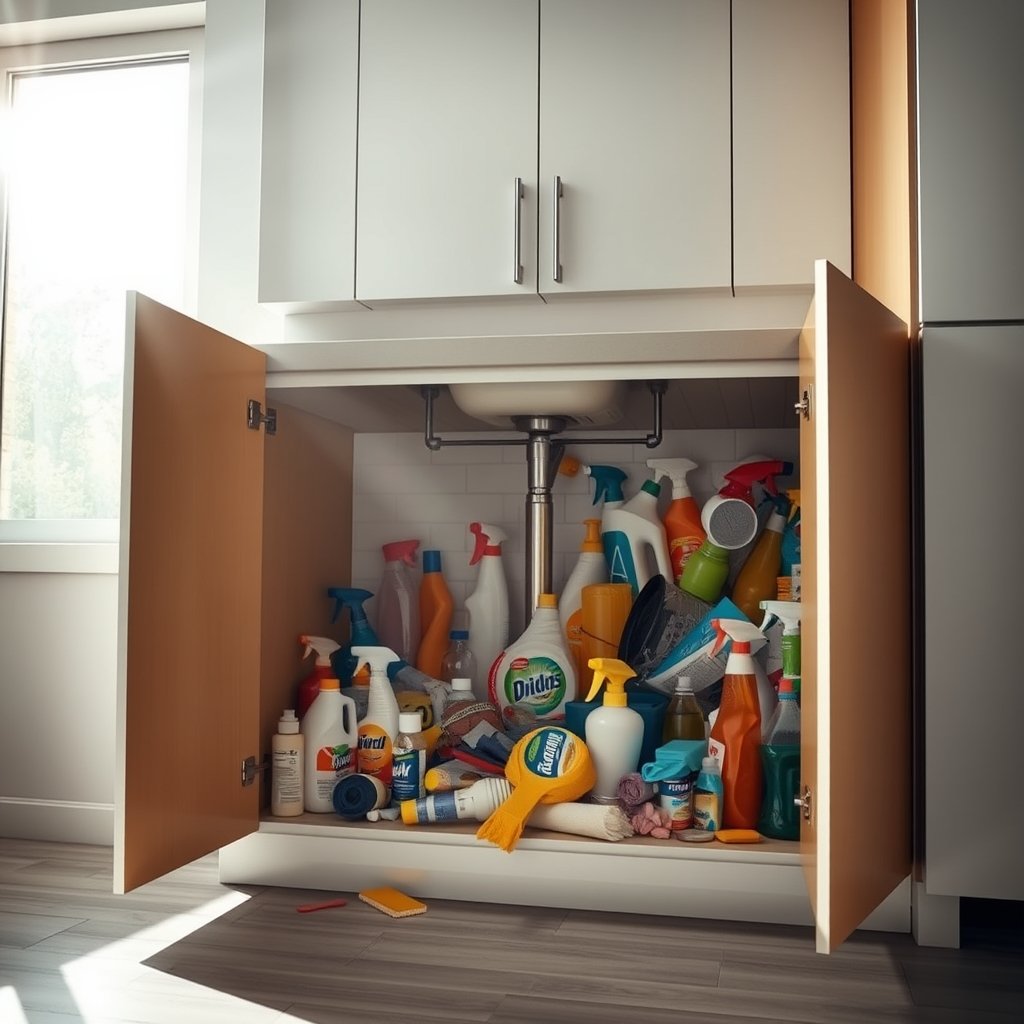
Most kitchen under sink storage goes underutilized for a simple reason: irregular cabinet shapes, massive plumbing, and one-size-fits-nobody organizers. Garbage disposals, bulky P-traps, and fixed-width pull out shelves eat up prime volume and leave odd dead zones your containers can’t reach. If you’re renting or renovating on a mid-range budget, these constraints can halve your usable space.
Data backs this up: In 2024, around 30–35% of a standard 35-liter under-sink cabinet—which totals about 12–15 liters (0.4–0.5 cubic feet)—sits completely unused.[1] That’s enough to store two months’ worth of dishwasher pods or three full spray bottles. Most organizers on the market either try to shoehorn in drawers where pipes block movement, or use materials that sag under basic cleaning supplies. Custom cabinetry is rarely practical—so modular solutions and smarter measurement are essential.
Quick, repeatable method to measure usable vs wasted volume
If you want real space saving storage—not just a tidier pile—start with a simple measurement method. Here’s how to get your actual usable volume and see exactly what’s being wasted:
- Clear out the cabinet. Remove everything so you’re measuring actual free space.
- Measure the full interior: Use a tape to get width, depth, and height (in cm or inches). Multiply for total available cubic volume. For example: 70cm wide x 40cm deep x 38cm high = 106,400 cubic cm = 106.4 liters.
- Map plumbing obstacles: Measure the width, depth, and height of pipes and disposals. Subtract this “footprint” volume from your total.
- Calculate usable volume: Usable volume = Total — (Pipes + sloped cabinet zones).
- Convert to wasted percent: (Wasted volume ÷ Total volume) x 100 = Percent wasted.
Example: If pipes/disposal use up 35,000 cubic cm (~35L), your usable space is 71L. Wasted percent is (35 ÷ 106.4) × 100 ≈ 33% wasted—almost perfectly matching the national average.
Template: Download a printable measurement grid or sketch your cabinet with obstacles outlined—that way you don’t forget which areas are unusable. If your numbers are above the 30–35% wasted average, you’ve got lots of room for an under sink organizer upgrade.
Prioritize: frequency-based categorization to keep daily items accessible
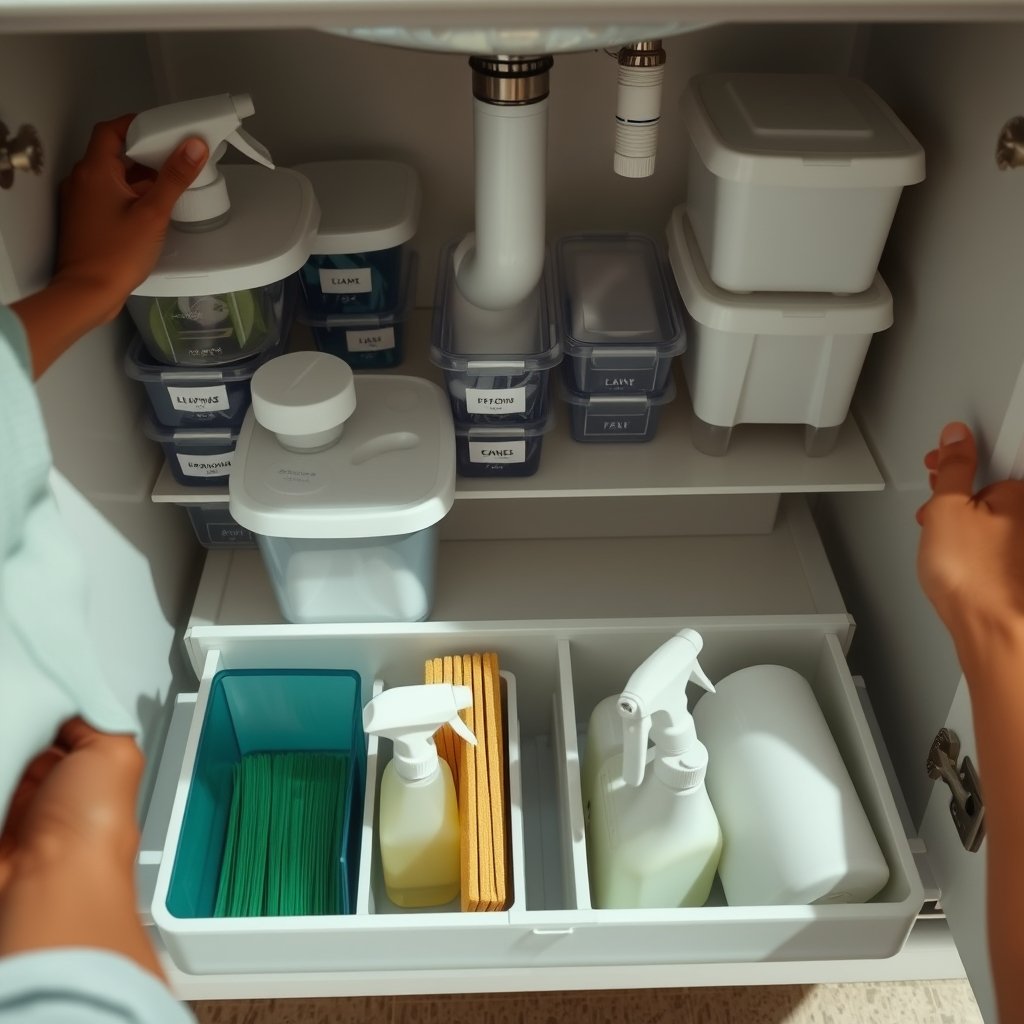
Most articles on kitchen cabinet organizer upgrades skip this crucial step. Instead of sorting “by size” or “by product type,” take a frequency-based approach to avoid back-of-cabinet chaos:
- Daily-use: Put dish soap, scrubbers, trash bags, and hand cleaners in easy-reach spots—front shelves or door-mounted caddies (see more ideas).
- Weekly: Store less-used but heavy items (multi-surface sprays, refill bottles) in sturdy pull out shelves or mid-cabinet trays.
- Seasonal/bulk: Tuck things like insect spray, shoe polish, or refills in stackable bins at the back—label clearly.
This organization method not only saves time, but reclaims useable space that typically gets overstuffed or cluttered. Many top-ranking guides miss this, but it’s critical for lasting, frustration-free under sink storage.[3]
Need a broader kitchen strategy? Check out these kitchen ideas for daily cooking and storage efficiency.
Designing around pipes, disposals and irregular interiors
The main reason pull out shelves and other organizers fail is “collision.” Standard trays often bang into P-traps or disposals, and fixed-height units rarely fit low-clearance cabinets. Here’s how professionals avoid those headaches:
- Open-frame shelving: Leave large square openings to route pipes through, maximizing tension-free storage space.
- U-shaped drawers: Fit these around drain assemblies, keeping full-extension function (take measurements before buying).
- Offset trays and tiered lazy Susans: Rotate/tray-style organizers glide past obstacles and let you grab small bottles from the back.
- Double-door racks: Mount caddies on both doors for the ultimate space saving storage—ideal for daily-use items.
Always check: Measure minimum clearance from pipes to the cabinet wall/floor before purchasing. As cited in this real-world case study, returns spike when organizers bump into plumbing, or lack depth for standard bottles.
Want more whole-home organization? Try these home decor ideas for small spaces.
Choosing adaptable pull-outs and modular systems (buying guide)
Not all organizers are created equal. Expandable and modular under sink organizer options work best for irregular cabinets:
| Feature | Expandable/Modular | Fixed-Width |
|---|---|---|
| Fits Irregular Cabinets | Yes | No |
| Adapts Around Pipes | Yes | Rarely |
| Max Load (Average) | Up to 30 lbs (13.5kg) | 10-15 lbs (4.5-7kg) |
| Adjustable Height | Usually | Sometimes |
| Material Quality | Metal/Sealed Wood/PVC | Often plastic/thin wire |
Choose soft-close slides for less noise and better access. Always check width, depth, and height before ordering—returns for poor fit are the most common user complaint.[3] Consider DIY rollouts if you have unusual cabinet sizes—here’s how in the next section.
Want more on modular solutions? Explore this guide to modular kitchen storage.
Materials & moisture-resistance — what pros don’t tell you
Moisture is your cabinet’s invisible enemy. Even high-end organizers can fail or mold if made from particle board or open-wire steel. To extend organizer life and avoid musty smells or mildew, use only anti-mold, moisture-resistant materials:
- Stainless steel — Won’t rust, even in high humidity
- Powder-coated metal — Resists corrosion, wipes clean
- Sealed plywood — For DIYers, only if fully sealed/painted
- PVC components — Lightweight, affordable, and waterproof
Install stick-on floor liners or vent holes out the back to keep air circulating. According to top experts, lack of material guidance is a key gap in most articles—don’t overlook it if you want long-term results.
If you need additional anti-mold storage tips for pet spaces, try these pet storage ideas for inspiration.
DIY quick installs: convert existing shelves into effective pull-outs
If off-the-shelf pull out shelves won’t fit, quick DIY conversions give you bespoke results for less:
- Sliding trays: Install low-profile ball bearing or nylon runners (hardware store). Takes 25–40 minutes per shelf.
- Caster bins: Attach mini wheels to sturdy bins—great for deep cabinets or awkward plumbing.
- Low-profile wire baskets: Mount directly under the base shelf with screws. Keeps sprays upright.
You’ll need a drill/driver, level, screws, and marking tape. Always double-check clearances before mounting—pipes can shift or sag if not accounted for. DIY methods succeed where standard organizers fail, especially in non-standard layouts.[6]
Skill level: Beginner to intermediate; time required: 20–45 minutes per rollout; cost: $15–$60 each.
For more kitchen hardware upgrades, look at this space-saving oven combo guide.
Maintenance routine to maximize usable life and prevent mold
Moisture and leaks are the fastest way to ruin new under sink storage—and undo your space saving work. Stop future headaches with a monthly checklist:
- Inspect for leaks under all pipes and disposals (use towels for spotting drips)
- Wipe down all shelves and bins with a mild anti-mold cleaner (avoid bleach on metal)
- Aerate by leaving cabinet doors open for 1 hour monthly
- Check sealed plywood and liners for cracks or warping
- After any leak, empty all organizers, dry thoroughly, and replace any cardboard boxes with plastic/PVC
The right materials plus this routine give your organizers the longest possible life—and keep reclaimed space dry and functional.[9]
Step-by-step layout planner and purchasing checklist
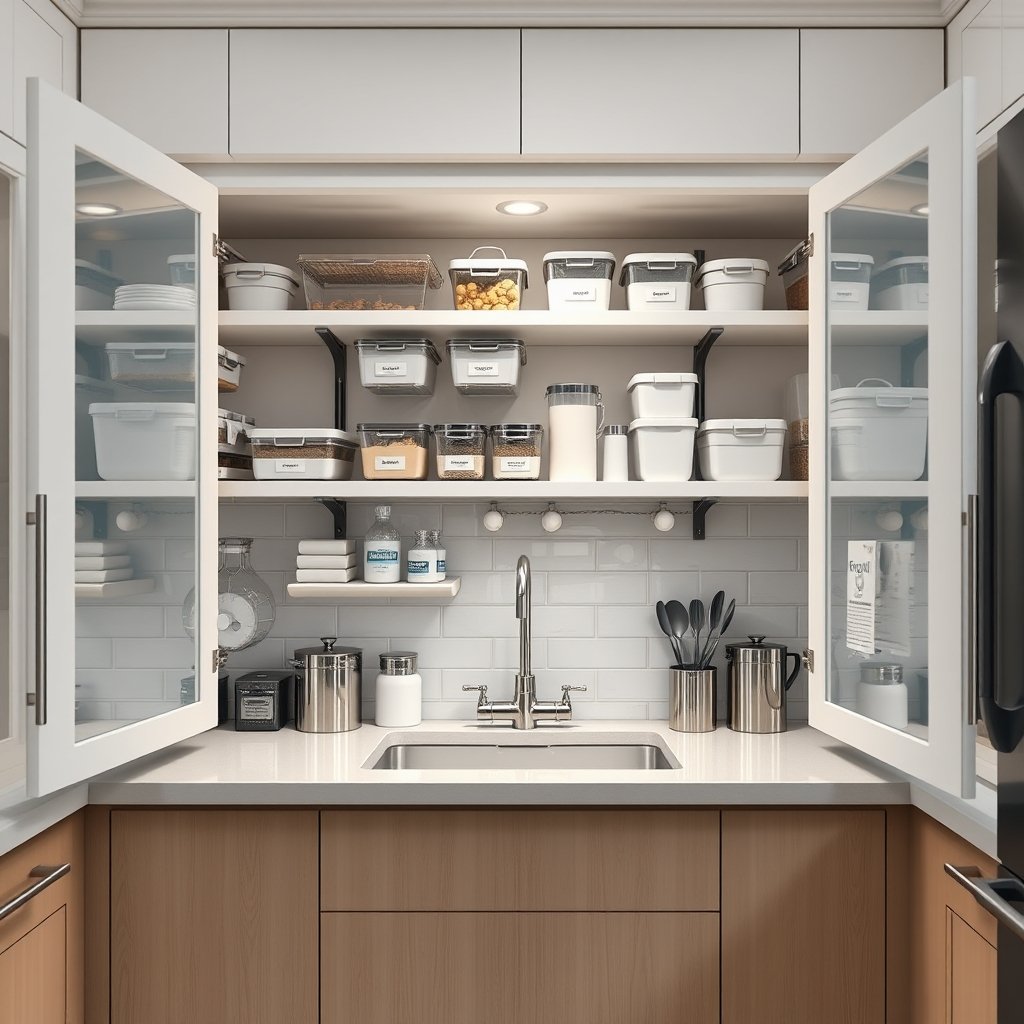
Before you shop, use this actionable planner to maximize results:
- Measure: Record your cabinet’s full width, depth, and height.
- Map plumbing obstacles: Draw in pipes/disposals on your sketch.
- Choose zones: Assign daily, weekly, and seasonal zones as above.
- Select organizer types: Match pull out shelves, bins, or caddies to each zone.
- Buying checklist: Ensure each purchase matches your:
- Width, depth, and height requirements (leave 1cm+ buffer)
- Sufficient clearance for all tray/drawer motion
- Load rating (aim for 15–30lbs minimum)
- Moisture-resistant, anti-mold build
If you currently waste 30–35%, reclaiming even half will give you a solid bump in daily usability.
Common mistakes to avoid (short dos & don’ts)
- Don’t buy fixed-width organizers without measuring first.
- Don’t ignore pipe locations or disposal footprint—always map before installing.
- Don’t choose thin wire or unsealed MDF (they’ll sag or mildew fast).
- Don’t overload deep drawers—use bins for heavy or seasonal supplies only.
- Do categorize by frequency, not just by product or size.
Per user reviews and research, these mistakes cause most returns and wasted money on under sink storage upgrades.[1]
Quick product recommendations & where to buy (segmented by cabinet type)
- Tight or irregular cabinets: Modular, open-frame pull out shelves, PVC bins, door-mount caddies
- Wide cabinets with disposals: U-shaped expanding drawers, powder-coated metal racks, soft-close slides
- DIY preference: Ball-bearing wood rollouts or caster bins (see above for build steps); always use sealed plywood or plastic
Pick products with adjustable sizing, moisture-resistant finishes, and a weight rating of 15lbs minimum. These factors directly address the most common user complaints, along with layout planning and material selection.
Expected gains and simple ROI (what you should achieve)
If you use this full system, you can realistically expect to reclaim as much as half your wasted space (about 6–7.5 liters in a typical 35-liter cabinet), and cut time spent searching for daily items by more than half. Even a $60 DIY rollout or $80 mid-range modular kit pays for itself quickly by preventing duplicate purchases and making supplies visible and accessible.
Want your entire kitchen to work smarter? Review our full modern kitchen ideas guide for more high-impact upgrades.
FAQ
How do I know if my under sink organizer will fit?
Measure your cabinet’s usable width, depth, and height after accounting for pipes and disposals. Compare to the organizer’s specs, and leave at least 1cm clearance on each side for installation and movement.
What materials last longest in damp under-sink environments?
Stainless steel, powder-coated metal, and sealed plywood or PVC are best for moisture resistance. Avoid untreated wood or thin plastic trays, as they are prone to mold or warping.
Can I install pull out shelves myself?
Yes. With a basic drill, screwdriver, and level, most ball-bearing or soft-close pull outs can be installed in under an hour. Always mark no-go plumbing zones before drilling mounting holes.
How often should I check for leaks or mold under the sink?
Do a quick visual wipe-down monthly, and after any plumbing work or heavy spills. Replace or clean organizers immediately after any water event for best results.
What’s the most common mistake to avoid?
Installing fixed-width or deep organizers without measuring pipe clearances, which leads to ill-fitting storage or blocked drawers. Always map plumbing layout first.