

### Blog Post:
Modular kitchen storage can make or break daily cooking flow, but most home remodelers still find themselves sorting through a mess of usability gaps, corner headaches, and hardware letdowns.
Key Takeaways
- Most pain points stem from poor corner cabinet solutions, non-adjustable or ill-fitting modules, retrofitting struggles, and build quality issues that cause wobble or fast wear.
- Budgets range from a few hundred for small retrofits to over $10,000 for semi-custom modular kitchen storage—plan for extra hardware, labor, and feature upgrades.
- Prioritize high-impact, realistic upgrades: full-extension pull out organizers, drawer divider systems, illuminated pantry pull-outs, and smart bin ideas for true usability boosts.
- Why modular kitchen storage still frustrates users
- True cost breakdown — what you’ll actually pay
- Which organizer types solve which problems (and which to avoid)
- Pantry storage ideas top articles miss (high-impact, modern solutions)
- Retrofit vs full replacement — decision framework
- Budget-friendly upgrades that deliver the biggest usability gains
- Specifications & install checklist for hiring a pro (or DIY)
- 30-day action plan and prioritised shopping list
- Visuals, product examples, and sources to include in the post
- FAQ
Why modular kitchen storage still frustrates users
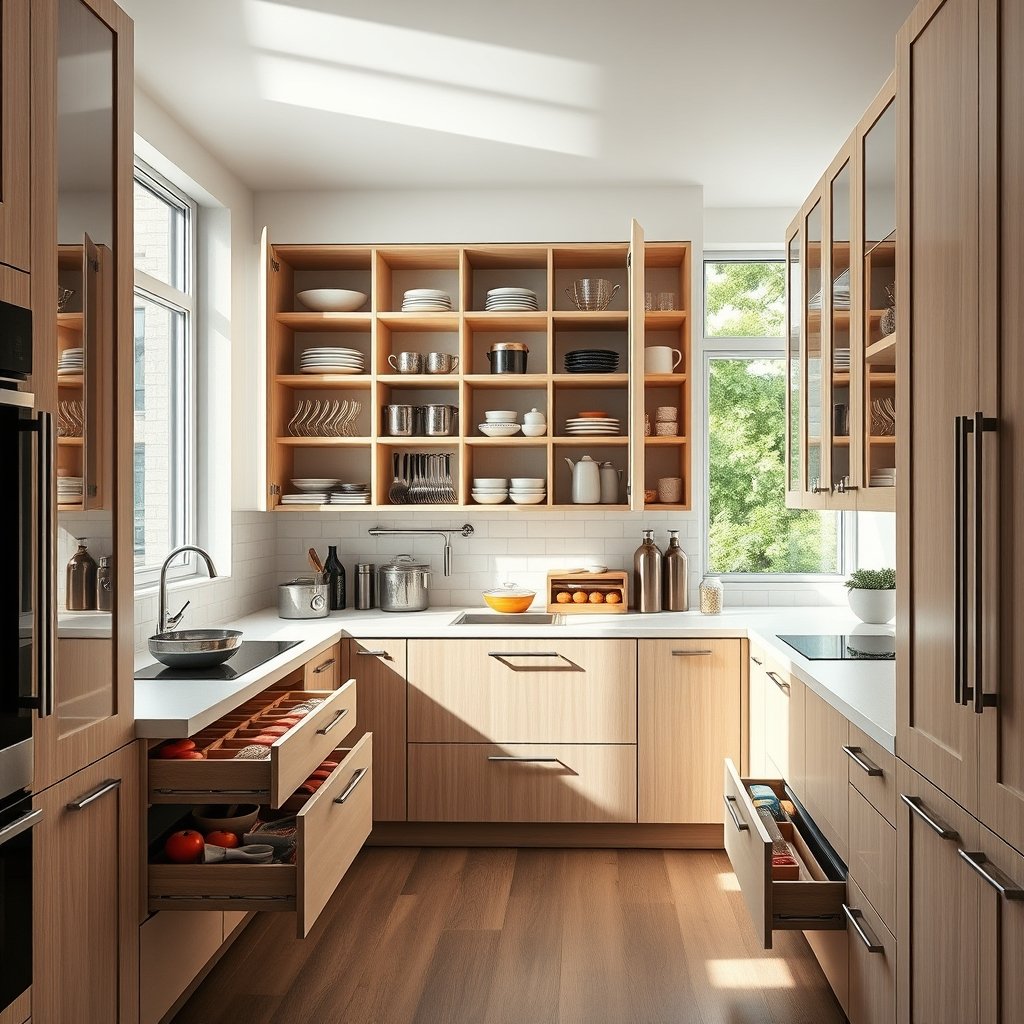
Despite endless product options and clever catalog images, real users struggle with modular kitchen storage for the same reasons year after year. Based on 2024 research, the most cited complaints include:
- Poor access to deep corners—blind corners become dead zones or require contortionist bending.
- Non-adjustable, fixed-dimension organizers that leave wasted gaps or won’t fit older cabinetry.
- Difficulty retrofitting new organizers or pull-out systems into existing cabinets—compatibility is rarely guaranteed.
- Inconsistent build quality—cheaper modular kits often wobble, deform with time, or slide poorly.
- Material and labor costs rapidly escalate, especially for anything more than basic boxes, with add-ons multiplying totals.
Several of these issues have lasting effects. Awkward corner storage means food or cookware gets lost and rarely used. Weak, wobbly hardware wears quickly, forcing replacement long before the rest of the kitchen needs it. And when retrofitting products, many homeowners find off-the-shelf “modular” solutions are not universally compatible—they often end up hacking, returning, or giving up.
True cost breakdown — what you’ll actually pay
Planning a modular kitchen storage upgrade? Costs add up fast. Here’s what you can really expect:
- Stock modular packages: Usually $3,000 total, about $100–$300 per linear foot installed. Best for basic, standard-sized boxes.
- Semi-custom modular: $7,000–$10,000 (or $150–$650 per linear foot installed), offering more flexibility, finishes, and organizers.
- Custom modular: $500–$1,200 per linear foot—>$12,000 for a typical project, but with full control on sizing and organization options.
Don’t forget hardware upgrades:
- Pull out organizers: $150–$300 per unit (hardware only).
- “Per box” installation: $100–$300 extra per cabinet if hiring a pro.
- Labor: $50–$100+ per hour for skilled cabinetry work (source).
The average cabinet installation in the US is about $6,199 (Angi), but the range is wide, from under $2,000 for a small modular refresh (think swap in a few organizers and touch the trim) up to $10,000 and beyond for full replacement in mid-size kitchens. When planning, always pad your budget for extra pull-outs or special finish upgrades. Budget for waste sorting, lighting, or custom dividers—these options cost more but drive usability up.
Which organizer types solve which problems (and which to avoid)
Picking the right organizer is less about trends and more about matching the actual pain points of your current kitchen:
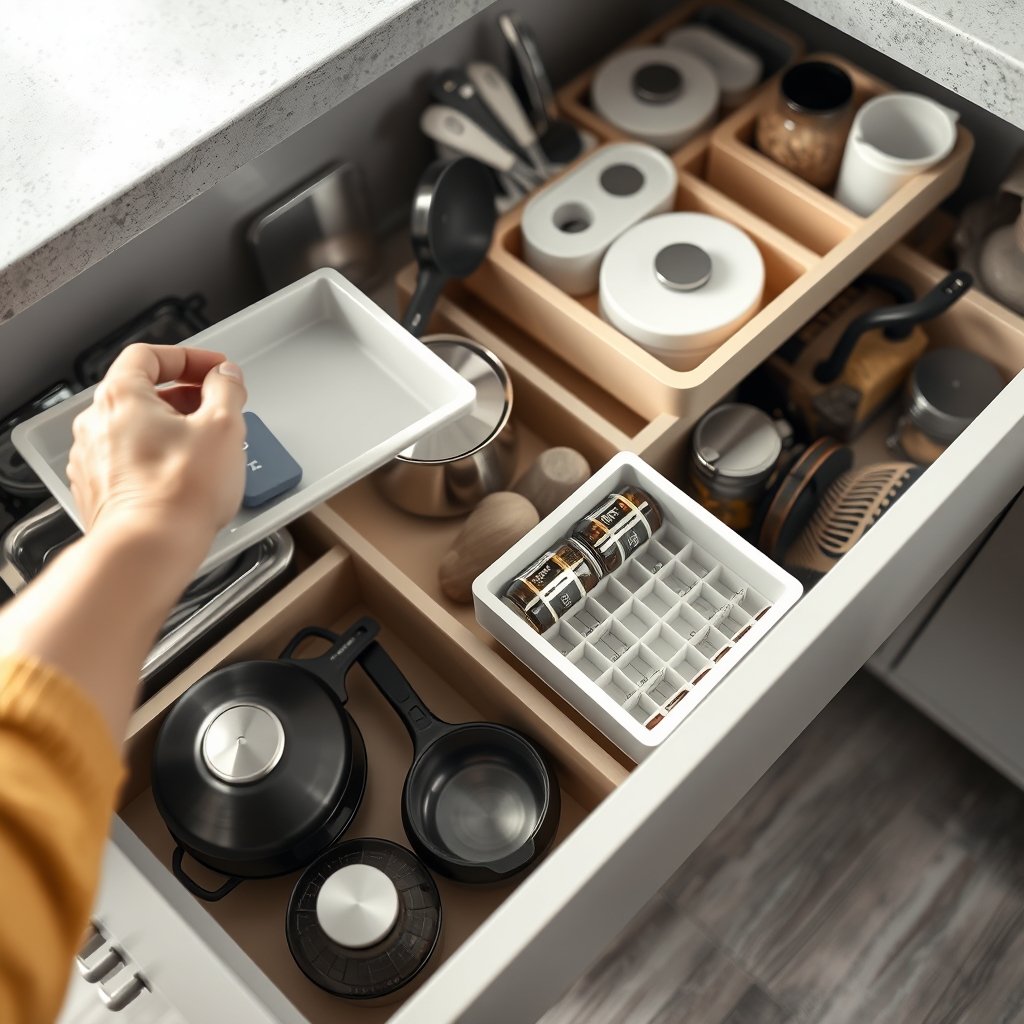
- drawer divider system: Best for cutlery, utensils, spices, and shallow food containers. Look for adjustable, snap-together dividers (not fixed trays) to avoid “dead” wasted space. Avoid cheap plastic solutions that warp or jam when overloaded.
- pull out organizers: Crucial for deep base cabinets—full-extension (ideally soft-close) hardware lets you use the entire depth without crawling inside. Retrofits can be tough on older cabinet walls; always check anchor compatibility.
- Specialized corner solutions: Lazy Susans and swing-outs can rescue blind corners, but choose metal or solid-wood builds. Retrofit kits often don’t fit if the original corner is undersized, so measure twice.
- Upper cabinet pull-downs: Bring high shelves within reach—but beef up mounting for weight. Retrofit failure is common if hinges or supports are weak.
- Integrated waste/recycling: Top-mount slide-out bins are high ROI for under-sink spaces where regular pull-outs rarely fit.
Warning: Inconsistent quality is the biggest retrofit risk. Users frequently report wobbling and premature hardware failure—especially with universal drawer divider kits or “one size fits all” pull-out shelves (source).
Pantry storage ideas top articles miss (high-impact, modern solutions)
Most “pantry storage ideas” lists regurgitate basics—wire baskets, shelf risers, canisters. Here are five advanced, high-impact concepts that deliver real transformation, but are still overlooked in competitor blogs:
- Illuminated pull-out pantry columns: These tall, handle-free columns feature LED lighting and fully adjustable dividers—allowing rapid reconfiguration and zero “lost” items at the back.
- Modular magnetic or snap-in bin systems: These clip into pantry panels; you choose bin size and layout on demand, then snap in or slide out as your grocery storage needs change.
- Smart inventory sensors and QR code tagging: Handy for bulk foods or specialty diets—you can check what’s running low with an app before you shop, reducing forgetful rebuys or food waste (Grand View Research).
- Built-in waste sorting or vacuum-seal compartments: Integrate food waste and recycling right where you prep. Or keep bulk staples fresher longer with at-the-source vacuum drawers.
- Under-shelf rolling racks: These maximize vertical space between pantry shelves, snapping on and sliding out for easy access to flat items or snacks.
Want more pantry design inspiration? Browse our kitchen ideas for storage solutions that fit smaller homes or open-plan spaces.
Retrofit vs full replacement — decision framework
Knowing when to retrofit versus replace is crucial for both budget and frustration control. Use these practical rules:
- Retrofit when: Your cabinet box structure is sound, you only need to close small accessibility gaps (like adding pull outs or new dividers), your budget is under $3,000, or you like your current kitchen’s looks.
- Replace when: The old layout has persistent corner issues, cabinets are warped or structurally unsound, critical organizers don’t fit, or you want a major visual overhaul.
Think in cost thresholds:
- Small wins run a few hundred dollars (a drawer divider system, under-shelf racks).
- Full installation averages $6,199 (mid-range kitchen), while a complete semi-custom modular kitchen typically totals $7,000–$10,000 (Homelight).
If you’re still unsure, our home decor ideas guide has more on balancing function and investment around existing furniture and cabinetry.
Budget-friendly upgrades that deliver the biggest usability gains
If you only do a few upgrades, prioritize those with the highest ROI for daily usability:
- Drawer divider system: Adjustable kits, often $15–$60, organize utensils or shallow items. Entry-level options from IKEA or Home Depot are easy to DIY-install.
- Single-drawer pull out organizers: For $150–$300, add full-extension, soft-close access to deep base cabinets—no more hunting in the back.
- Under-shelf organizers: Clever add-ons like the IKEA KLIPPKAKTUS fridge rack cost only $5–$6 but create extra storage for items like wraps or snacks.
- Targeted task lighting: Battery LED strips or adhesive lights under cabinets instantly improve visibility for as little as $10.
- Soft-close/glide upgrades: For $25–$75 per set, these make existing drawers and pull-outs quieter and last longer.
Most modular kitchen storage projects can stretch from “pocket change to several hundred dollars,” making upgrades like pull-out organizers and aftermarket dividers accessible at every tier (Grand View Research).
For more ways to elevate your home’s feel quickly, see our list of home decor ideas that complement organized kitchens.
Specifications & install checklist for hiring a pro (or DIY)
Whether retrofitting or replacing with new modular kitchen storage or custom kitchen organizers, good prep means fewer expensive mistakes. Here’s your essential checklist:
- Internal cabinet dimensions: Measure all width, height, and depth excluding door thickness and hinges.
- Clearances: Check for door swing, appliance, and wall/floor gaps—especially for pull out organizers.
- Load ratings: Heavy cookware means you need 75–100+ lbs per pull-out minimum.
- Hinge/glide compatibility: European-style, soft-close, or undermount? Snap a photo before shopping.
- Warranty and build quality: Ask vendors or pros for parts coverage and steer clear of products with cheap fasteners or no warranty.
For professional work: Labor rates run $50–$100/hr; “per box” install is $100–$300—get written estimates, confirm what’s included, and ask for before/after references from your installer (source).
For more organization tips and simple upgrades, visit our kitchen ideas.
30-day action plan and prioritised shopping list
Here’s a realistic month-long roadmap to a transformed kitchen, covering quick wins and big-impact changes:
- Week 1—Audit: Measure all cabinets, list problem areas, assess which organizers and pull-outs are feasible. Record door swings and interference points.
- Week 2—Quick wins: Buy and install low-cost organizers (drawer divider systems, under-shelf bins under $50). Label spaces for easy resets.
- Week 3—Order/schedule pro install: Hire a specialist for tricky pull out organizers, corner solutions, or integrated waste. Get written warranty.
- Week 4—Final tweaks: Add lighting, adjust dividers, apply QR code labels or inventory tags if desired.
Sample budgets to guide you:
| Small Refresh | Medium Upgrade | Full Semi-Custom | |
|---|---|---|---|
| Drawer divider system | $25–$60 | $60–$180 | $250+ |
| Pull out organizers | 1 unit ($150–$300) | 3 units ($450–$900) | 6–8 units ($900–$2,400) |
| Under-shelf/rolling racks | $10–$25 | $60–$100 | $100–$300 |
| Lighting & smart pantry | $25 | $60–$100 | $200+ |
| Labor | DIY | $300–$1000 | $2,000–$3300 |
| Total | $200–$400 | $1,000–$2,500 | $7,000–$10,000 |
Remodeling is big business: US kitchen-specific renovation spend topped $180 billion in 2024 (source), and demand for storage is still growing.
Round out your kitchen plans with ideas from our home decor guides and garden ideas for inspiring, livable spaces.
Visuals, product examples, and sources to include in the post
- Cutaway diagrams: Show how corner swing-outs or lazy Susans work—clarify space usage or fit.
- Before/after layouts: Visualize the impact of a pantry storage refresh or base cabinet pull-out install.
- Spec comparison tables: Rate pull out organizers, drawer divider systems, and custom kitchen organizers by glide/load rating, price, and fit compatibility.
- Product picks:
- Drawer divider system: IKEA UPPDATERA (budget), Rev-A-Shelf (mid), Hafele custom (premium)
- Pull out organizers: IKEA MAXIMERA (budget), Home Depot Rev-A-Shelf (mid), Blum Legrabox (premium soft-close)
- Pantry storage ideas: IKEA KLIPPKAKTUS under-shelf rack, IKEA VARIERA bins, Hafele illuminated pull-out
- Authoritative pricing sources: IKEA, Angi, Homelight, and Grand View Research.
See more on choosing hardware and glides in our kitchen ideas hub.
FAQ
What is the average cost to retrofit modular kitchen storage versus full replacement?
Small retrofits with drawer dividers and under-shelf organizers can range from $200–$500 DIY. Full replacements with semi-custom units often start at $7,000 and average around $10,000, including installation and popular pull out organizers.
Can I install pull-out organizers myself, or do I need a pro?
Simple pull out organizers and drawer divider systems are often DIY-friendly, especially in modern cabinets. For heavy-duty glides, corner units, or older cabinetry, hiring a pro ensures fit, function, and warranty coverage.
Which upgrades deliver the most usability without a full remodel?
Start with adjustable drawer divider systems and one or two high-quality pull out organizers for base cabinets. Add under-shelf racks and LED strips for quick, transformative wins—these often fit existing cabinets without major tools or demo.
How do I make sure organizers fit older modular kitchen storage cabinets?
Clear, precise measurement is crucial. Always check internal widths and depths, skip “universal fit” claims, and confirm load ratings. Bring photos and dimensions to the store or vendor when shopping for custom kitchen organizers.
Where can I find ideas for organizing other parts of my home?
We have home decor ideas for all rooms, plus garden ideas for functional outdoor spaces.
—